How Much to Charge Clients for AI UGC Ads: A Rate Card for Editors
Generation got cheap. The finished ad did not. Here is how to build a rate card for AI UGC ads around the timeline work clients actually pay for, with real numbers for per video, package, and retainer pricing.
Pricing AI UGC ads is confusing because the input cost collapsed and the output cost did not. A single generated clip can cost you a few cents. What your client actually buys, a finished ad that survives the feed, still takes real timeline work: hook selection, caption timing, b-roll cutaways, aspect ratio versions, and a render that does not look like a template. Quote off the generation cost and you price yourself into a corner within a month. Quote off the finished cut and you keep the margin the tooling just handed you.
In short
- Price the finished, platform ready cut, never the generated clip. Generation is an input cost, like a stock license.
- Start at $150 to $350 per finished AI UGC ad for raw delivery, and $250 to $600 once captions, hooks, and a second aspect ratio are included.
- Move any client past six videos a month onto a monthly package. Your platform cost is flat, so volume is where your margin lives.
- Quote usage rights separately, at 30 to 100 percent of the base rate, and put a term on it.
- Bill variations at a discount off the first cut, because the timeline is already built.
Quick answer:
- Solo editors should charge $150 to $350 per finished AI UGC ad, agencies $400 to $900, with captions and one extra aspect ratio included at the higher end.
- Monthly packages beat per video pricing above roughly six ads a month, because tool subscriptions run $39 to $399 flat no matter how much you output.
- Usage rights, whitelisting, and paid amplification are separate line items, typically adding 30 to 100 percent on top of production.
What the client is actually buying
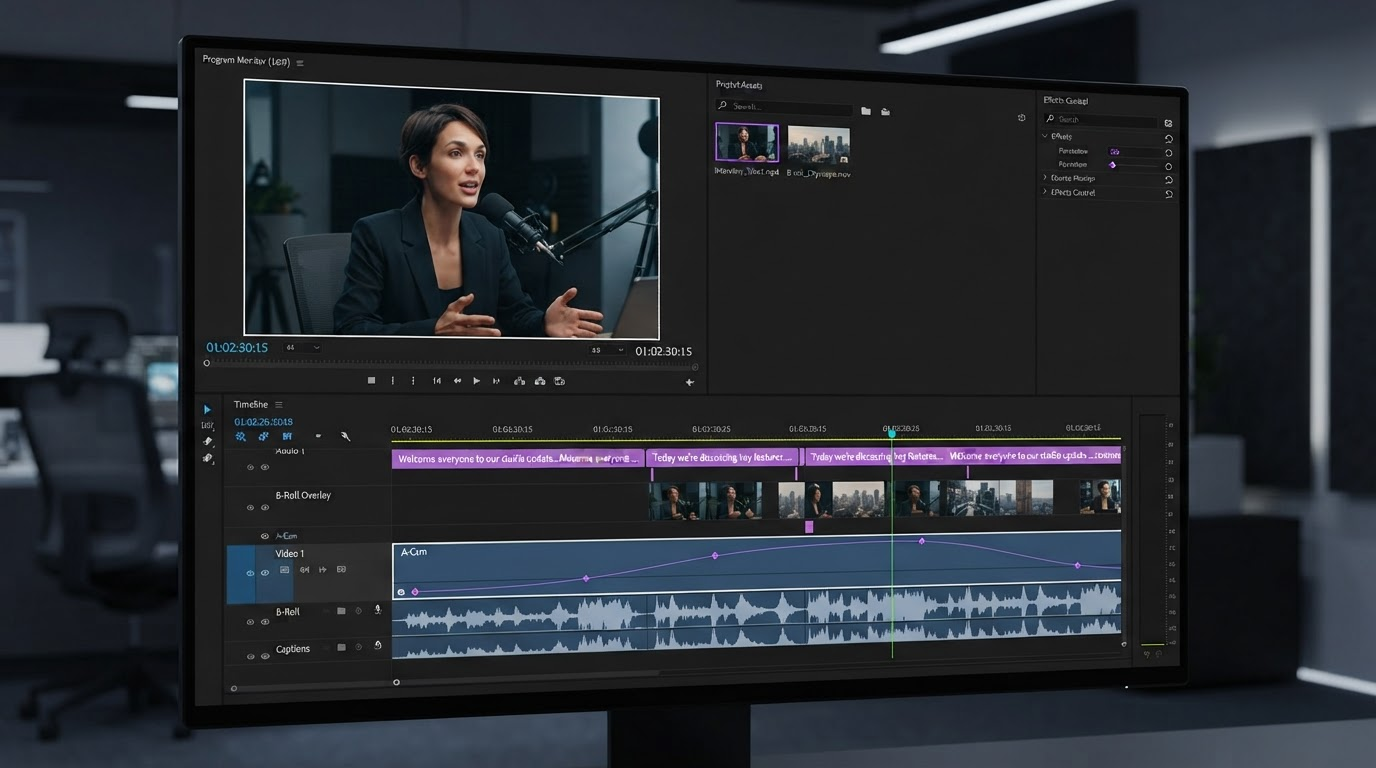
Nobody hires you for a clip. They hire you for an ad that goes straight into Meta Ads Manager or TikTok Ads Manager and starts spending budget. Every item on that checklist is timeline labor:
- A hook that lands in the first 1.5 seconds, usually chosen from three or four attempts
- Burned in captions readable at 60 percent volume off, synced to the word
- Product cutaways or screen recordings layered over the talking head
- A 9:16 master plus 1:1 and 4:5 versions for placements that need them
- An end card with the offer, brand colors, and a legible call to action
None of that comes out of a generator. It comes out of an editor in a timeline with layers and keyframes. Count those items when you build a rate card, not the clips you generated to get there. An ad that needs product footage cut into it is closer in labor to a product video build than to a one shot render, and should be priced that way.
The three pricing models, and when each one wins
| Model | Typical range | Best for | Watch out for |
|---|---|---|---|
| Per video | $150 to $600 per finished ad | Clients running fewer than 6 ads a month, or a first project with someone new | Revision creep. Cap rounds at two. |
| Package | $1,200 to $4,000 for 8 to 15 ads | Brands testing creative in batches | Scope drift on aspect ratios and hook counts |
| Monthly retainer | $2,500 to $8,000 a month | Performance teams that need weekly refresh | Getting treated as an on call editor |
Per video pricing is the honest starting point. It is easy to approve and it gives you real data on how long a finished ad takes. Run it for one or two projects before quoting anything bigger.
Packages are where most freelancers should land. A brand testing creative wants eight angles and a winner, not one ad. Price the batch, define what a "variation" means in writing, and deliver on a fixed date.
Retainers fit once a media buyer asks for new creative weekly. You are selling throughput then, not videos. Be specific: twelve ads a month, 48 hour revisions, two hook variants each.
Build the rate card from timeline hours
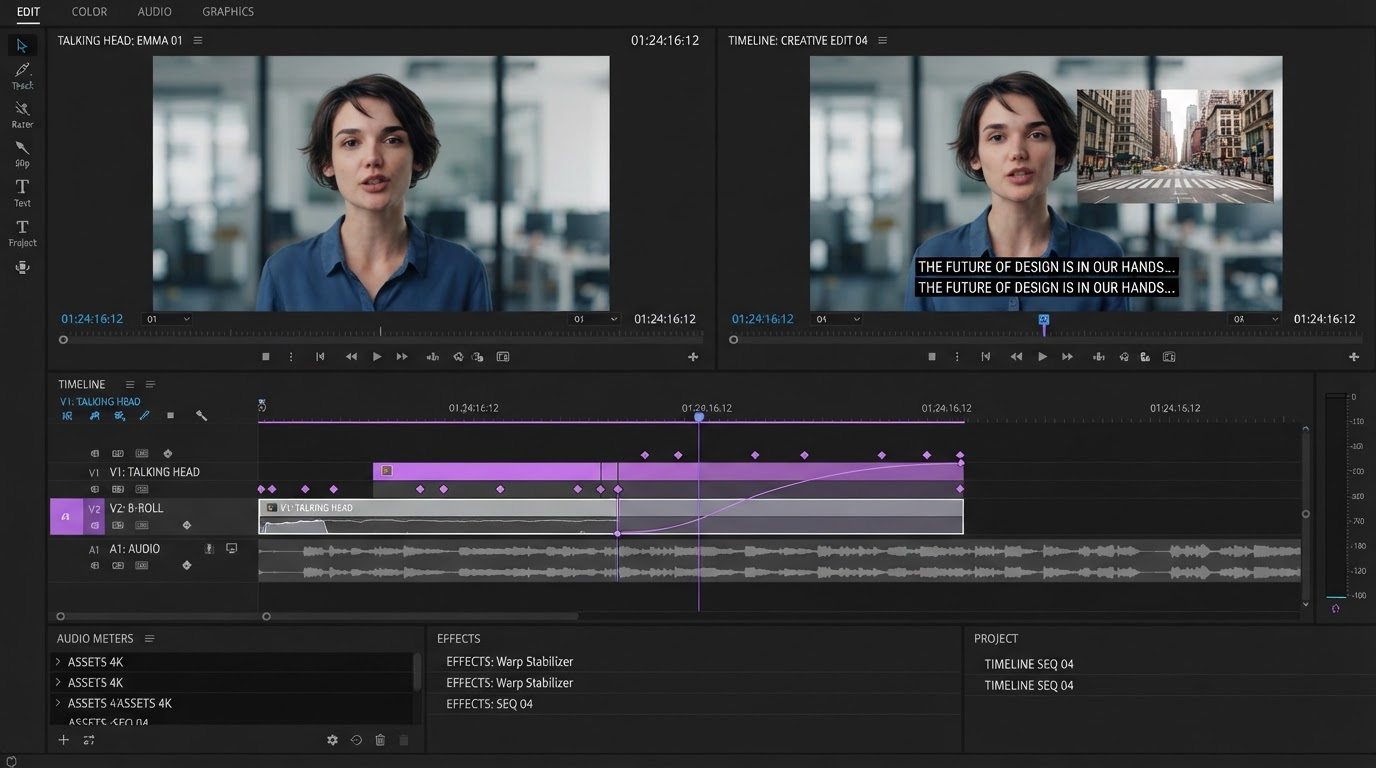
Time yourself on one real ad, end to end, then work backward from your hourly floor. A finished AI UGC ad breaks down roughly like this:
- Script and hook writing: 20 to 40 minutes
- Generating and sorting source clips: 15 to 30 minutes
- First assembly on the timeline: 30 to 45 minutes
- Caption pass and timing cleanup: 20 to 30 minutes
- Cutaways, product layers, end card: 20 to 40 minutes
- Aspect ratio versions and export: 15 minutes
That is two to three hours for the first ad in a set. At a $100 hourly floor your true cost sits between $200 and $300, which is why the $150 raw tier only works with captions and versions excluded. The second and third ads take 40 to 60 minutes each, because the caption style, end card, and subtitle setup already exist as reusable layers. Price the first ad at full rate and variations at 40 to 60 percent of it.
Keep the generation step on its own line, separate from labor. Tool subscriptions run $39 to $399 a month regardless of output, and a five variation campaign that costs $1,100 to $2,950 with human creators lands closer to $100 to $285 in platform fees. To see how that upstream generation budget is modeled before you quote, learn more about the cost math behind AI UGC production.
Price the add-ons that eat your afternoon
Most underpricing happens in the extras, not the base rate. Quote these as named line items so the client sees choices, not assumptions:
- Extra hook variants: $40 to $80 each. Same body, new first three seconds. Fast for you, high value for their testing.
- Extra aspect ratios: $30 to $60 per ratio per ad. Reframing a talking head for 1:1 is a real recompose, not a crop, so charge for it.
- Caption styling to brand: $75 to $150 once per client, then free on later ads. It is a setup cost, and saying so builds trust.
- Rush turnaround under 48 hours: add 25 to 50 percent.
- Raw project file handover: add 50 to 100 percent, or decline it. You are selling your build, not just the render.
Do not bundle everything into one number to look competitive. A bundled quote hides the work, and hidden work is what clients ask you to redo for free. Line items also give you somewhere to discount from when a client pushes back.
Usage rights, whitelisting, and the paid media question
Production and usage are two different sales, and this is where most editors leave money on the table. Production is the ad. Usage is permission to run it, where, and for how long. Standard practice adds 30 to 100 percent of the base rate for paid usage, rising with longer terms and more platforms. Write the term into the invoice: organic only, 90 days paid social, or 12 months all channels. When it ends, that is a renewal conversation, not a favor.
Whitelisting, where the ad runs from a brand or creator handle, sits at the top of the range and commonly bills at $500 to $2,000 or more per asset. If your ad will carry six figures of spend, the invoice should reflect that it is a media asset, not a file.
One note specific to AI UGC: the synthetic performer saves you per creator licensing and reshoot costs, but you inherit disclosure obligations on some platforms. Put platform compliance and any required AI disclosure on the client in writing, and keep the prompt and source assets for every delivered ad.
Revisions, before the first invoice
Revisions are the silent margin killer. Two rounds included, then $75 to $150 per extra round, holds up in practice. Define a round as one consolidated list of notes, not a trickle across three days.
Review inside a shared editor instead of over email. When a client pins a note to the exact frame, you stop guessing what "make the hook punchier" means. A collaborative editing setup turns a two day feedback loop into an afternoon, and that time is pure margin at a fixed price.
For a client who thinks the whole job is a prompt, the breakdown of AI generation versus editing is a useful thing to send before the scope conversation starts.
A rate card you can copy
Starting point for a solo editor with a real portfolio, adjust up 20 to 40 percent for agency positioning:
- Single ad, raw delivery, 9:16 only: $200
- Single ad, captions and end card, 9:16 plus one ratio: $375
- Batch of 5, one concept, 5 hook variants: $1,250
- Batch of 10, three concepts, captions and two ratios: $2,800
- Monthly retainer, 12 ads, 48 hour revisions: $3,600
- Paid usage rights, 90 days, paid social: plus 40 percent
- Whitelisting, 12 months: plus 100 percent
Review those numbers each quarter against your actual timeline hours. If your per ad time drops because your vertical video setup got faster, that gain belongs to you, not automatically to the client.
Frequently asked questions
Should I tell clients I am using AI to make the ads?
Yes, and it costs you nothing framed correctly. Clients buy performance and speed, not a production method. Say you use AI generation for source footage and do the creative direction, editing, and finishing yourself. Some platforms and brand contracts require AI disclosure on the ad itself, so put responsibility for that in writing either way.
How much cheaper should AI UGC be than hiring real creators?
Somewhat cheaper, not dramatically. A traditional five variation campaign runs roughly $1,100 to $2,950 with creator fees, revisions, and licensing. Deliver the same set for $1,250 to $2,000 and the client sees a clear saving while you keep a healthy margin. Pricing at $300 for the batch trains them to treat your work as a commodity.
Do I need a different rate for TikTok versus Meta ads?
Not for the base edit, since the master is the same. Price the difference in the deliverables list: platform specific safe zones, caption placement, and export specs each take a pass. Charging $30 to $60 per additional platform version keeps it simple and honest.
Before you send the next quote
The pricing question is really a positioning question. Sell generated clips and you compete with a subscription. Sell finished ads with hooks, captions, versions, and a usage term attached and you are selling what a production company sells, at a speed they cannot match.
Time your next ad end to end, set your hourly floor, and rebuild your rate card from those two numbers. Build the caption style, end card, and export presets once, so the second ad in every set takes half as long as the first. That reusable timeline is the asset. The invoice is just where it shows up.
Founder of Motionbox and Gluely. Building tools for creators.